As a real estate agent, you could add your headshot and bio to your brokerage website, link to the MLS, and call it a day.
But why would you want to?
Your real estate website is one of the few places online that’s completely about you and your business. It’s your chance to show potential clients who you are, where you work, what you know, and most importantly, why they should work with you.
It can also help more of the right people find you.
Because let’s be honest, anyone can search Zillow for homes.
When someone visits your website, they’re probably looking for more than another list of properties. They want to know what’s in it for them. Do you know the market? Do you understand the neighborhoods they’re considering? What will you bring to the table when they’re ready to buy or sell?
Your website gives them a place to learn more about you and decide if you might be the right agent for them.
After working with real estate agents for more than 15 years, I’ve seen a lot of agent marketing. And the best websites aren’t necessarily the biggest or most complicated. They simply make it easy for potential clients to understand who the agent is, what they know, and how they can help.
So, how do you help the right buyers and sellers find you and then give them a reason to choose you once they do?
Here’s what your real estate website should include.
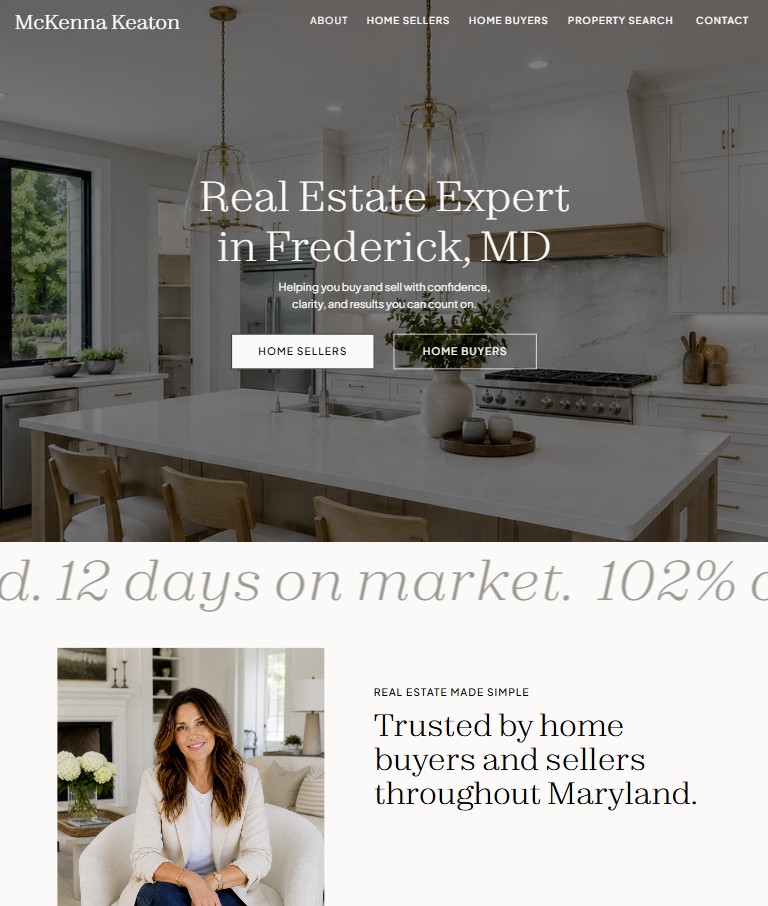
Your Homepage Should Make It Clear Who You Are and Where You Work
Your homepage shouldn’t make visitors work to figure out what you do.
Within a few seconds, they should know you’re a real estate agent, where you work, and ideally, a little about what sets you apart.
If you specialize in historic homes in Frederick, luxury properties in Northern Virginia, or first-time buyers in Baltimore, say it.
Skip the generic “Your Dream Home Awaits” headline and use that valuable space to tell people something that matters.
Clear is almost always better than clever.
This also gives you a natural opportunity to mention the cities, neighborhoods, or regions you serve. That’s helpful for potential clients and gives search engines more context about where your business is relevant.
Give People a Reason to Choose You
Your website shouldn’t just tell people you’re a real estate agent. They already know that.
It should help them understand why they should work with you.
Maybe you’ve been selling homes in your market for 20 years. Maybe you’re known for exceptional property marketing. Maybe you’ve lived in the area your entire life and know the neighborhoods inside and out. Or maybe you specialize in a particular type of property or client.
Those are the things your website should bring forward.
And if you’re a new agent, don’t assume you have nothing to say because you don’t have hundreds of sales or 50 testimonials yet.
You can show that you know your market. Create useful neighborhood content. Talk about the buying or selling process. Share local resources. Show your connection to the community. Explain how you work and what clients can expect from you.
You don’t need 20 years of sales to be useful.
On the flip side, if you do have 20 years of experience, your website gives you a place to show it. Bring together your results, testimonials, local knowledge, specialties, awards, press, and experience so potential clients can see the full picture.
Whether you’re brand new or well established, your website should answer one simple question: Why should I work with you?
Make It Easy for Buyers and Sellers to Find What They Need
Buyers and sellers may both land on your homepage, but they’re looking for very different things.
Make it easy for them to find what they need.
Dedicated buyer and seller pages give you room to explain your process, answer common questions, share helpful resources, and show potential clients how you’ll help them.
And think beyond Search Homes and What’s My Home Worth?
What does a first-time buyer need to know before getting started? How do you help sellers prepare their homes for market? What does your marketing process look like? What happens after someone contacts you?
You probably answer these questions all the time anyway. Your website can start answering them for you.
Show That You Know Your Local Market
If you want to be known as the local expert, your website should give people a reason to believe you are.
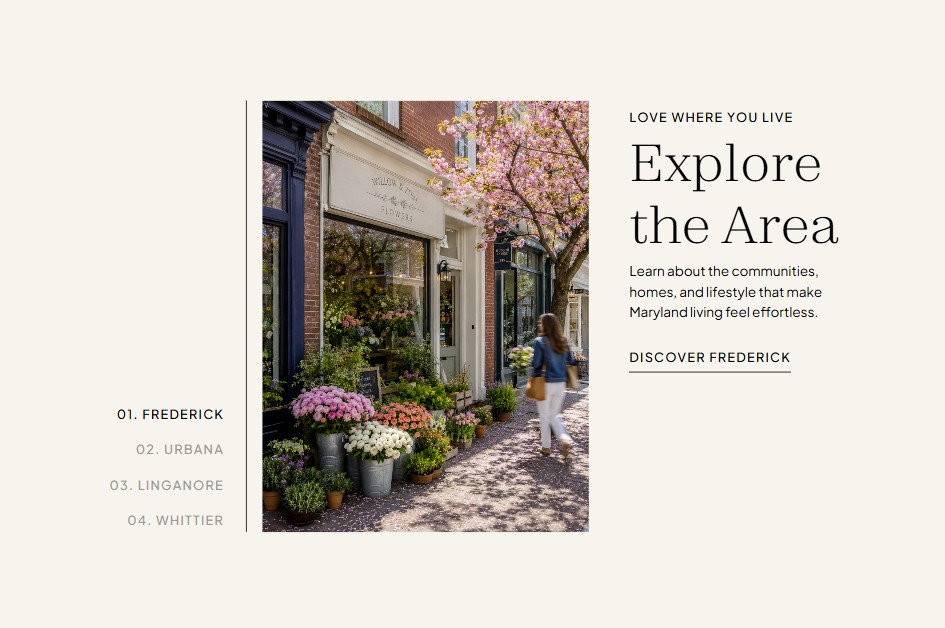
Create pages for the cities, communities, and neighborhoods you serve. Talk about what makes each area different, the types of homes you’ll find there, local amenities, things to do, and the details someone considering a move would want to know.
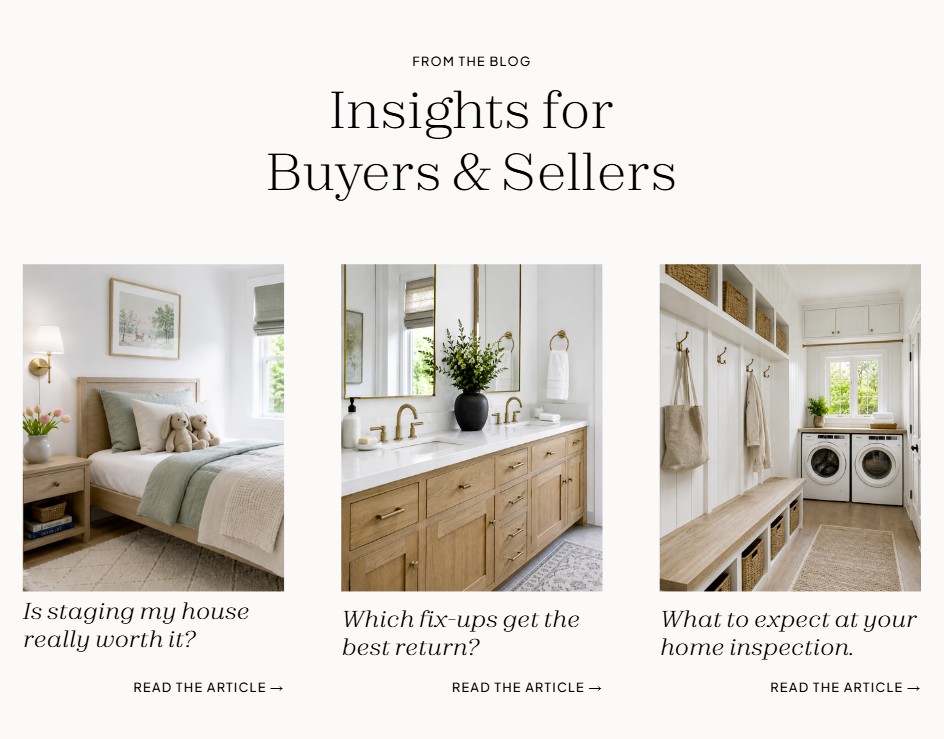
Then keep building on that information through your blog. Share neighborhood spotlights, local market updates, community guides, annual events, new businesses, or answers to questions you’re hearing from buyers and sellers.
This can also support your SEO efforts.
Most agents would love to show up when someone searches for a real estate agent in [your market]. There’s no magic page you can add to your website that guarantees that will happen. But useful, original content about the areas you serve can help search engines better understand your business and where it’s relevant.
And remember, this isn’t just about Google.
A potential client may find your website through Instagram, a referral, a yard sign, an open house, or even your email signature. When they get there, all that local content reinforces the fact that you know your market.
Your Website Should Be About More Than Your Listings
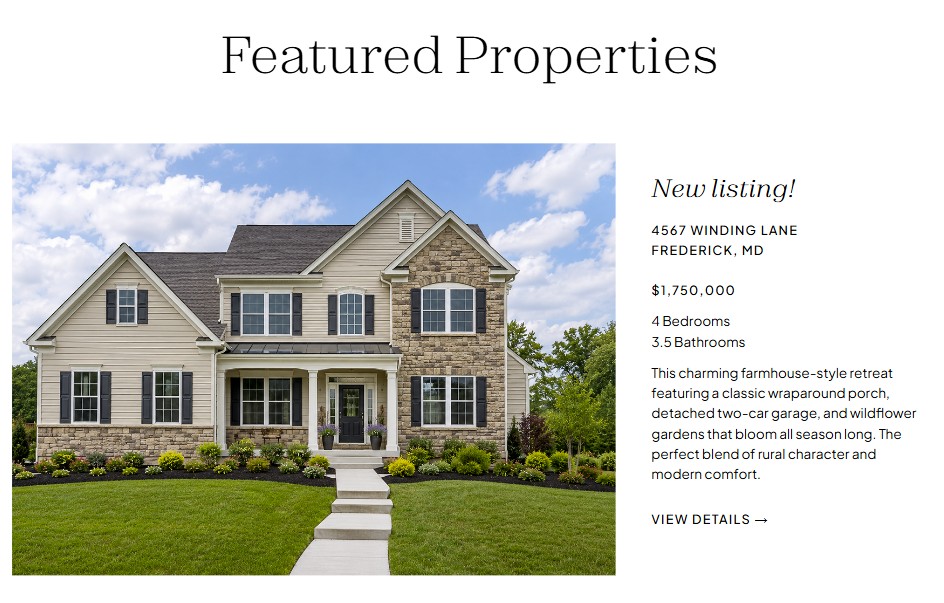
Of course, your real estate website should have a place for properties.
But it doesn’t need to be the whole website.
Anyone who wants to scroll through every home currently for sale can already do that on Zillow, Redfin, and plenty of other sites.
What those websites don’t show is what you bring to the process.
Use your website to showcase current listings, properties coming soon, recent sales, or individual property pages. Professional photography and thoughtful property marketing can also show potential sellers how you’ll present their home when it’s time to sell.
Even past sales can help tell the story of the markets, neighborhoods, price points, and types of properties you know.
Your listings should support your expertise, not be the only thing you have to offer.
Do You Need IDX on Your Real Estate Website?
Not necessarily.
IDX allows visitors to search active MLS listings directly from your website. That can be useful if you want property search to be a bigger part of your website experience.
And if you don’t want IDX? That’s okay too.
Instead, create a simple form, that gives visitors an easy way to tell you what they’re looking for. You can then set up a curated property search and have new listings that match their criteria delivered straight to their inbox.
That makes property search more personal and gives you an opportunity to connect with a potential buyer instead of simply sending them somewhere else to browse.
There’s no reason to add functionality just because every real estate website is “supposed” to have it. Think about how you want clients to use your site and choose the option that makes the most sense for your business.
Create an About Page People Want to Read
Your About page doesn’t need to be your résumé copied and pasted onto your website.
Yes, talk about your experience and credentials. But also tell people what it’s like to work with you.
What’s your approach? What do you care about? Why do you work in the market you do? What kind of clients do you love working with?
Real estate is a relationship business. People want to know something about the person they’re trusting with a major life decision.
You can be professional without sounding like a corporate bio.
Let Your Clients Do Some of the Talking
Testimonials are great. But you don’t need to hide every review you’ve ever received on one giant testimonials page.
Use some of your best ones throughout your website.
And whenever possible, choose testimonials that say something specific. She’s amazing! is nice to hear, but a review that talks about your communication, negotiation, market knowledge, or how you handled a difficult situation tells a potential client much more.
Established agents can also use sales history, statistics, awards, press, or other accomplishments to reinforce their experience.
If you’re newer and don’t have much of that yet, don’t fill the space just to fill it. Focus on what you can demonstrate now and keep adding proof as your business grows.
Your Actual Contact Information (Yes, Really)
This one sounds obvious, but after many years working with real estate agents, I’ve seen a surprising number of agent websites and landing pages where I can’t easily find an email address or phone number.
For a real estate agent, that’s a problem.
Your phone and email are two of the most important ways potential clients connect with you. Don’t make people search for them, and don’t make a contact form the only way someone can reach you.
Not everyone wants to fill out a form.
Some people just want to send you an email. Others would rather pick up the phone or send a text.
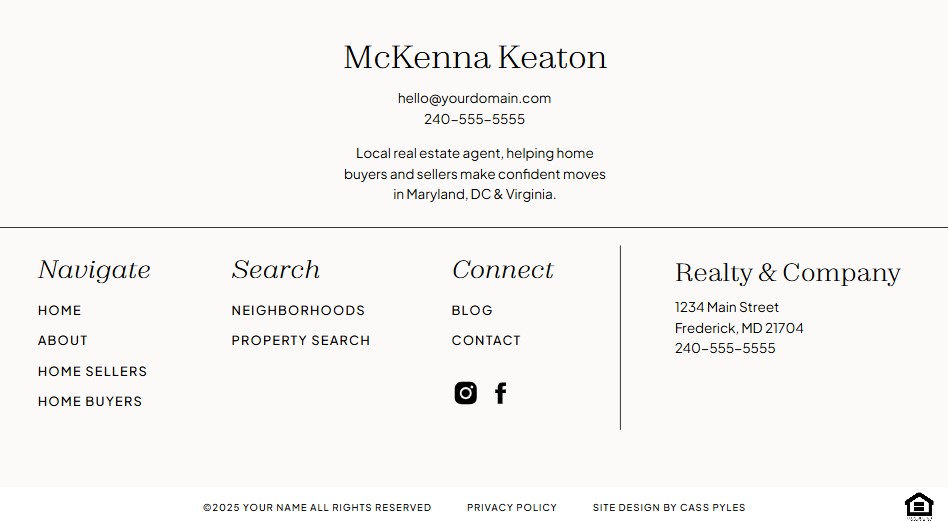
Make your phone number and email address easy to find. Include them on your contact page, but consider adding them to your website footer or other key areas as well. The goal is simple: when someone decides they’re ready to talk to you, make it incredibly easy to do it.
Give People a Reason to Stay Connected
Not everyone who visits your website is ready to call or email you that day.
Give them another reason to stay connected.
That could be a home valuation request, buyer or seller guide, local market update, neighborhood guide, newsletter, or another resource that’s useful to the clients you want to reach.
And don’t ask for someone’s name, email, phone number, address, firstborn child, and favorite color just so they can download a guide.
Ask for what you need.
The easier and more useful you make the experience, the more likely someone is to take that next step.
Do Real Estate Agents Need a Blog?
No, you don’t need a blog. But if you have one, it can be a great way to show what you know and help potential clients find your website.
And you don’t have to become a full-time blogger to make it worthwhile.
The key is to be strategic about what you write.
Think about the questions buyers and sellers are already typing into Google. Someone may be searching for the best neighborhoods in your area, what it’s like to live there, what they should know before buying a home, or how to prepare their home for sale.
A helpful blog post gives your website another opportunity to show up when someone searches for those topics. There’s no guarantee that every post will rank in Google, but creating content around the things your ideal clients are already looking for can support your SEO and bring the right people to your website.
And you can start simple.
Choose five evergreen topics your potential clients would find helpful and write a solid post about each one. Consider leaving the dates off those posts so the content doesn’t feel outdated a year or two from now.
You might start with topics like:
- A guide to moving to your area
- The best neighborhoods in your area for different lifestyles
- What buyers should know about buying a home in your market
- What sellers should know before listing their home
- A local guide to restaurants, shops, parks, or things to do
And not every post has to start from scratch. A new listing, recent sale, interesting client story, or successful seller strategy can become content too. The key is to go beyond simply announcing the listing or sale. Share something a future buyer or seller could learn from it.
Focus on quality over quantity. Five solid posts that answer real questions and show what you know are much more valuable than publishing something every month just because you feel like you’re supposed to.
You can always add more when you have something worth sharing. But you don’t need a complicated content calendar to get started.
A small library of useful, strategic content is a great place to begin.
Your website is where it all comes together
Your brokerage website has a purpose. Zillow has a purpose. Your social media accounts have a purpose.
But none of them are really yours.
Your own website gives your business a home for your experience, local knowledge, properties, personality, approach, content, and brand.
If you’re a new agent, it gives you a way to start establishing what you want to be known for before you have years of sales behind you.
If you’re an established agent, it gives you a place to bring together all that experience and authority you’ve built over the years.
And no matter where you are in your career, it gives potential clients somewhere to go when they’re trying to answer the question that really matters: Why should I work with you?
Want to See What This Looks Like in Action?
I created the McKenna Keaton Showit Website Template with all of this in mind. It’s designed for real estate agents who want a website that goes beyond a headshot, bio, and property search to show what they know, where they work, and what sets them apart.
Take a look around and see how it all comes together.
Be the first to comment